Intermodal transport
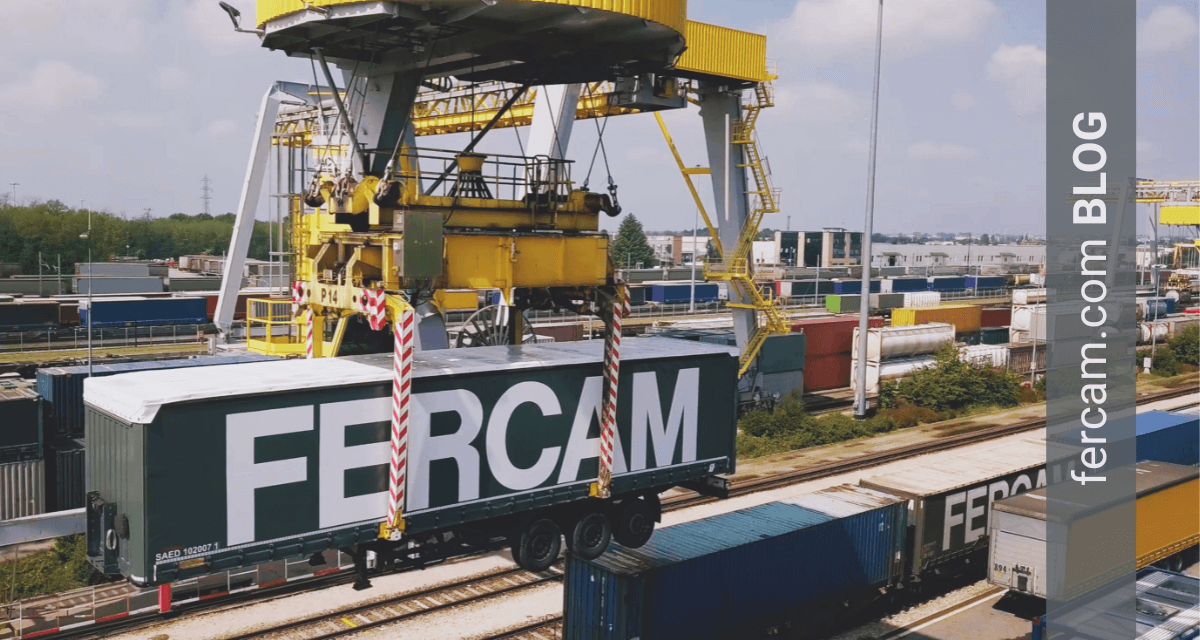
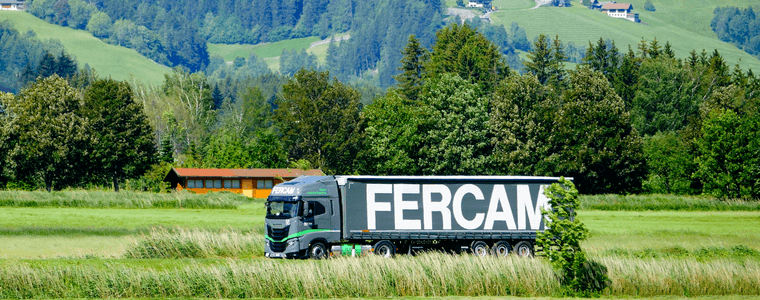
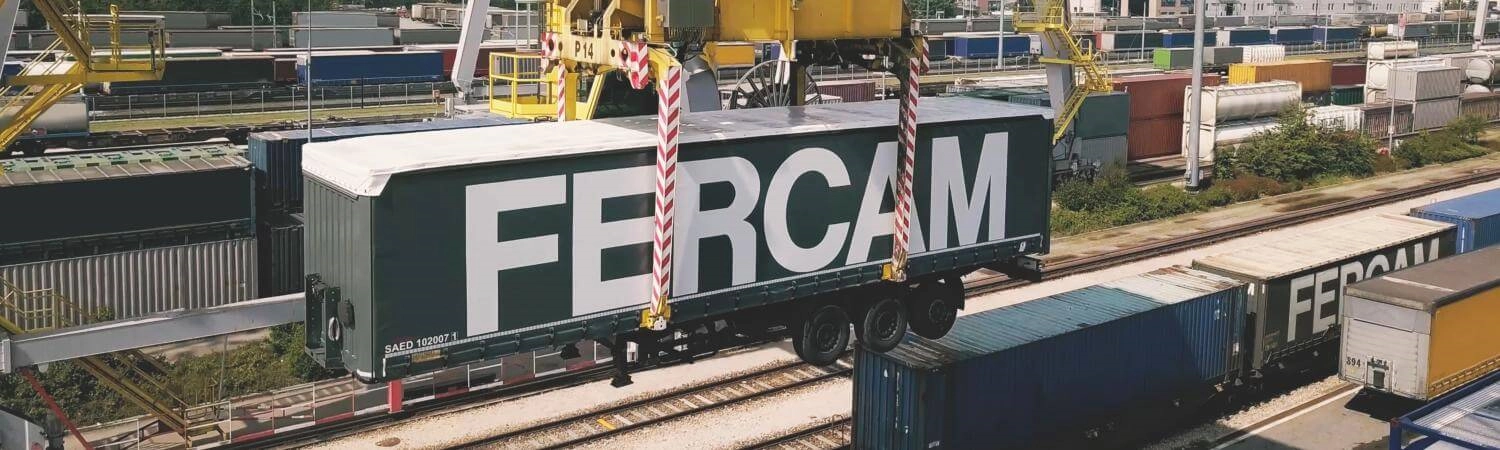
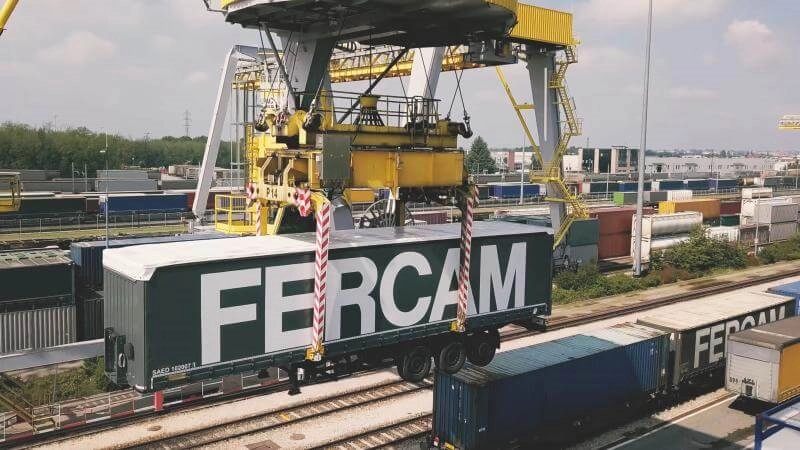
Intermodal transport combines several modes — typically road and rail — using the same standard loading unit (container, swap body or semi-trailer) that moves from one vehicle to another seamlessly: the goods undergo no further handling along the way. FERCAM manages it end-to-end, with its own train and terminals, combining service reliability with lower emissions on medium-to-long distances.
1949year founded
75+years in transport
23countries worldwide
7/7Company Train departures
100%FERCAM transport, end-to-end
The benefits
The benefits of intermodal transport
Standard loading units move from truck to train — and to ship for maritime flows — without the goods ever being touched: an efficient, protected chain.
−67%
CO₂ emissions
Shifting to rail cuts the footprint compared with road-only transport (Ecotransit data).
44 t
Payload
On intermodal corridors you load up to 44 tonnes in Europe.
●
Safety and traceability
Standardised units and advanced monitoring protect the goods along the entire route.
ADR
Special goods
We handle ADR goods and special flows with dedicated units and P400 semi-trailers.
How it works
One journey, three legs: the best of road and rail combined
A single point of contact manages the entire chain — from planning to terminal and from train to distribution — while the goods stay in the same loading unit throughout.
 Road01
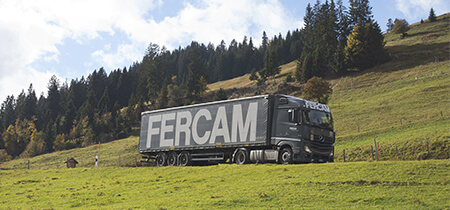
Short legs by roadCapillary connection to rail terminals.
Road01
Short legs by roadCapillary connection to rail terminals.
 Rail02
Long hauls by railFast, schedulable and low-emission.
Rail02
Long hauls by railFast, schedulable and low-emission.
 Last leg03
Final leg by roadDelivery to destination.
Last leg03
Final leg by roadDelivery to destination.
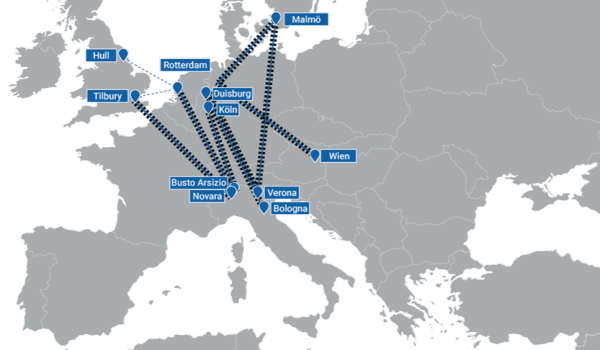 FERCAM Company Train
Direct connections Italy–Europe
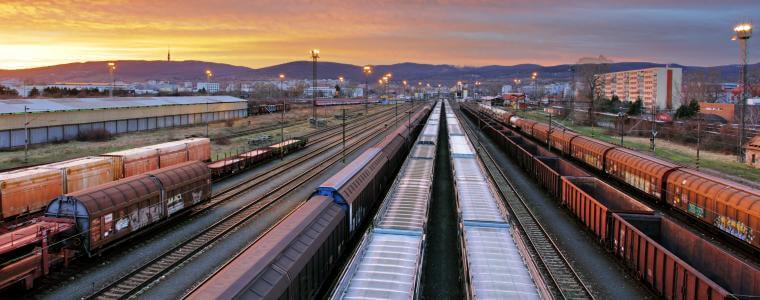
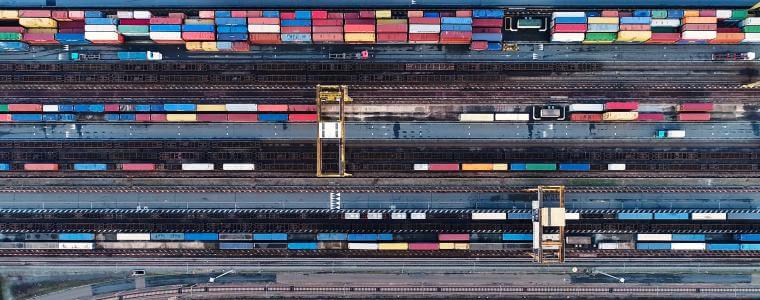
Thanks to agreements with the leading European rail operators, every day we connect Italian terminals with the continent's production areas — from Italy to Belgium, the Netherlands and the Cologne area, and beyond. One FERCAM train takes dozens of trucks off the Alpine passes: a stable, schedulable mode for long hauls to Northern Europe, complementary to road service.
- High departure frequency and slots always available
- Reliable, schedulable transit times
- Flexible capacity for volume peaks
How to choose
Road or intermodal: how to choose?
The best transport mode depends on your needs. On many routes road remains the fastest and most flexible; on certain corridors intermodal brings service continuity and a guaranteed lower CO₂ footprint. FERCAM manages both with a single point of contact and helps you identify the option best suited to your traffic.
Criterion
Road-only
FERCAM intermodal
Ideal distance
Medium range, shuttles, point-to-point and last mile
Medium-to-long haul, Italy–Europe corridors
Flexibility and timing
Maximum flexibility, immediate departures, ideal for urgent shipments
Scheduled high-frequency departures, plannable transits on long haul
Coverage
Capillary, any origin and destination
Optimal in areas served by terminals
Payload per trip
Up to 40 t
Up to 44 t on European intermodal corridors
CO₂ emissions
Reductions possible with FERCAM's own fleet
−67% on the rail leg vs diesel road-only (Ecotransit source)
ADR and special goods
Handled
Handled with dedicated units and P400 semi-trailers; on some routings (via Switzerland) customs procedures are avoided
Road is the right choice when…
- you ship on short-to-medium range, or have urgent point-to-point deliveries
- origin and destination are far from intermodal terminals
- you handle occasional or non-schedulable volumes
- you need maximum flexibility on delivery windows
Intermodal comes into play when…
- you have recurring flows at full or partial load on medium-to-long haul
- you must reduce and report emissions across the supply chain (Scope 3)
- you move on Italy–Europe corridors served by the FERCAM Company Train
- you also ship ADR goods or special flows
Not sure which mode best fits your flows? Let's analyse it together
Send us origin, destination and volumes. We study your traffic and indicate the most suitable mode — road or intermodal — with a dedicated emissions comparison. A single Transport point of contact, from the first analysis to the last mile.
Request your flow analysis
Intermodal or multimodal?
Don't confuse them. In intermodal transport the goods stay in the same loading unit for the whole journey; in multimodal transport several modes are combined under a single contract, but the goods may be transferred from one container to another. On the road–rail combination FERCAM works in pure intermodal.
Loading units
Loading units
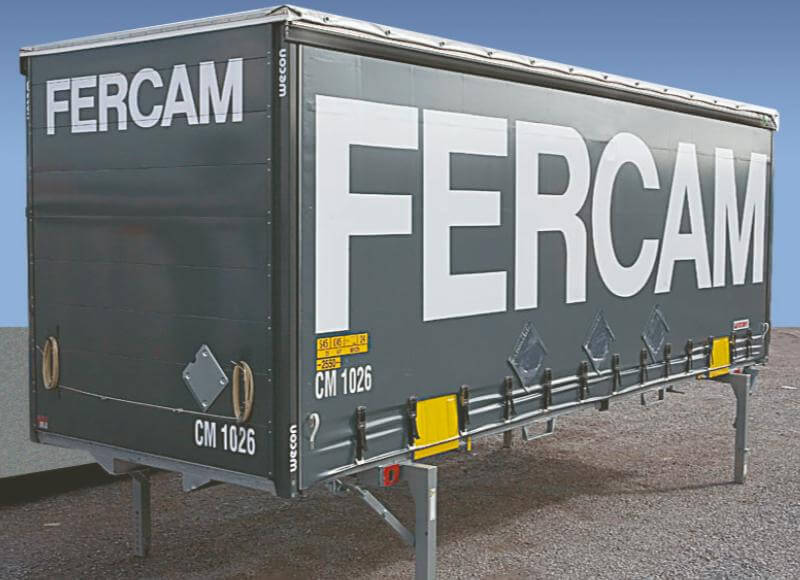
We choose the loading unit best suited to your flow. Swap bodies measure 7.45 metres, carry up to 26.5 tonnes and hold 36 pallet spaces; semi-trailers reach 13.60 metres, 28 tonnes and 33 pallet spaces. For maritime flows, containers come into play. All are ITUs (Intermodal Transport Units): the standard that enables transshipment from one vehicle to another without ever handling the goods.
Sustainability
A sustainable approach
Measurable decarbonisation, supporting your reporting
For those who must reduce and report emissions along the value chain (Scope 3), the road–rail combination is a concrete lever, with traceable figures. On the rail leg, CO₂ emissions fall by around 67% versus diesel road-only (Ecotransit data), and the HVO-powered last mile cuts the footprint further. FERCAM provides emission data calculated with recognised methodologies (Ecotransit tool, compliant with GLEC and ISO 14083 standards), useful to support your sustainability reporting.
−67% CO₂on the rail leg vs diesel road-only (Ecotransit)
HVOlow-emission last mile
GLEC · ISO 14083recognised reporting methodologies
Why FERCAM
Why choose FERCAM as your intermodal partner
100% FERCAM control
Road and rail managed directly: a single owner from quote to last mile.
Proprietary assets
FERCAM Company Train and own terminals: continuity that doesn't depend on third parties.
Rooted in Italy
Combined-transport experts since 1949, over 50 branches nationwide, daily corridors to and from Europe.
Single partner
Transport, terminal, customs and contract logistics integrated in one chain.
FAQ
Frequently asked questions on intermodal transport
What are the benefits versus road-only?
On suitable corridors, intermodal adds capacity (up to 44 t), schedulable transits and a CO₂ reduction of up to 67% on the rail leg versus the diesel road equivalent. On short haul and for urgent deliveries or in areas far from terminals, road-only remains the most efficient choice, with options to reduce environmental impact thanks to FERCAM's own fleet running on HVO, bioLNG or electric.
When does it pay off to switch to intermodal?
On recurring flows and medium-to-long distances, especially on the Italy–Northern Europe corridors. It becomes attractive when you need to move significant volumes continuously: on intermodal corridors you load up to 44 tonnes per trip (+4 t versus road-only) and you schedule peaks with high-frequency departures, without depending on driver availability on long hauls.
What is the difference between intermodal and multimodal?
In intermodal transport the goods stay in the same loading unit for the whole journey, with no break of load; in multimodal transport several modes are used under a single contract, but the goods may be transferred.
Is it suitable for ADR goods and special flows?
Yes. We handle ADR goods and special flows with dedicated loading units and P400 semi-trailers and specialised staff; on some routings, via Switzerland, customs procedures are avoided.
Do you also cover international intermodal transport?
Yes: from Italian terminals we reach the main European hubs and beyond with the FERCAM Company Train, for import and export at full and partial load.
Insights
Insights on intermodal transport
Intermodal transport combines several modes — typically road and rail — using the same standard loading unit (container, swap body or semi-trailer) that moves from one vehicle to another seamlessly: the goods undergo no further handling along the way. FERCAM manages it end-to-end, with its own train and terminals, combining service reliability with lower emissions on medium-to-long distances.
The benefits of intermodal transport
Standard loading units move from truck to train — and to ship for maritime flows — without the goods ever being touched: an efficient, protected chain.
CO₂ emissions
Shifting to rail cuts the footprint compared with road-only transport (Ecotransit data).
Payload
On intermodal corridors you load up to 44 tonnes in Europe.
Safety and traceability
Standardised units and advanced monitoring protect the goods along the entire route.
Special goods
We handle ADR goods and special flows with dedicated units and P400 semi-trailers.
One journey, three legs: the best of road and rail combined
A single point of contact manages the entire chain — from planning to terminal and from train to distribution — while the goods stay in the same loading unit throughout.
Direct connections Italy–Europe
Thanks to agreements with the leading European rail operators, every day we connect Italian terminals with the continent's production areas — from Italy to Belgium, the Netherlands and the Cologne area, and beyond. One FERCAM train takes dozens of trucks off the Alpine passes: a stable, schedulable mode for long hauls to Northern Europe, complementary to road service.
- High departure frequency and slots always available
- Reliable, schedulable transit times
- Flexible capacity for volume peaks
Road or intermodal: how to choose?
The best transport mode depends on your needs. On many routes road remains the fastest and most flexible; on certain corridors intermodal brings service continuity and a guaranteed lower CO₂ footprint. FERCAM manages both with a single point of contact and helps you identify the option best suited to your traffic.
| Criterion | Road-only | FERCAM intermodal |
|---|---|---|
| Ideal distance | Medium range, shuttles, point-to-point and last mile | Medium-to-long haul, Italy–Europe corridors |
| Flexibility and timing | Maximum flexibility, immediate departures, ideal for urgent shipments | Scheduled high-frequency departures, plannable transits on long haul |
| Coverage | Capillary, any origin and destination | Optimal in areas served by terminals |
| Payload per trip | Up to 40 t | Up to 44 t on European intermodal corridors |
| CO₂ emissions | Reductions possible with FERCAM's own fleet | −67% on the rail leg vs diesel road-only (Ecotransit source) |
| ADR and special goods | Handled | Handled with dedicated units and P400 semi-trailers; on some routings (via Switzerland) customs procedures are avoided |
Road is the right choice when…
- you ship on short-to-medium range, or have urgent point-to-point deliveries
- origin and destination are far from intermodal terminals
- you handle occasional or non-schedulable volumes
- you need maximum flexibility on delivery windows
Intermodal comes into play when…
- you have recurring flows at full or partial load on medium-to-long haul
- you must reduce and report emissions across the supply chain (Scope 3)
- you move on Italy–Europe corridors served by the FERCAM Company Train
- you also ship ADR goods or special flows
Not sure which mode best fits your flows? Let's analyse it together
Send us origin, destination and volumes. We study your traffic and indicate the most suitable mode — road or intermodal — with a dedicated emissions comparison. A single Transport point of contact, from the first analysis to the last mile.
Request your flow analysisIntermodal or multimodal?
Don't confuse them. In intermodal transport the goods stay in the same loading unit for the whole journey; in multimodal transport several modes are combined under a single contract, but the goods may be transferred from one container to another. On the road–rail combination FERCAM works in pure intermodal.
Loading units
We choose the loading unit best suited to your flow. Swap bodies measure 7.45 metres, carry up to 26.5 tonnes and hold 36 pallet spaces; semi-trailers reach 13.60 metres, 28 tonnes and 33 pallet spaces. For maritime flows, containers come into play. All are ITUs (Intermodal Transport Units): the standard that enables transshipment from one vehicle to another without ever handling the goods.
A sustainable approach
Measurable decarbonisation, supporting your reporting
For those who must reduce and report emissions along the value chain (Scope 3), the road–rail combination is a concrete lever, with traceable figures. On the rail leg, CO₂ emissions fall by around 67% versus diesel road-only (Ecotransit data), and the HVO-powered last mile cuts the footprint further. FERCAM provides emission data calculated with recognised methodologies (Ecotransit tool, compliant with GLEC and ISO 14083 standards), useful to support your sustainability reporting.
Why choose FERCAM as your intermodal partner
100% FERCAM control
Road and rail managed directly: a single owner from quote to last mile.
Proprietary assets
FERCAM Company Train and own terminals: continuity that doesn't depend on third parties.
Rooted in Italy
Combined-transport experts since 1949, over 50 branches nationwide, daily corridors to and from Europe.
Single partner
Transport, terminal, customs and contract logistics integrated in one chain.
Frequently asked questions on intermodal transport
What are the benefits versus road-only?
On suitable corridors, intermodal adds capacity (up to 44 t), schedulable transits and a CO₂ reduction of up to 67% on the rail leg versus the diesel road equivalent. On short haul and for urgent deliveries or in areas far from terminals, road-only remains the most efficient choice, with options to reduce environmental impact thanks to FERCAM's own fleet running on HVO, bioLNG or electric.
When does it pay off to switch to intermodal?
On recurring flows and medium-to-long distances, especially on the Italy–Northern Europe corridors. It becomes attractive when you need to move significant volumes continuously: on intermodal corridors you load up to 44 tonnes per trip (+4 t versus road-only) and you schedule peaks with high-frequency departures, without depending on driver availability on long hauls.
What is the difference between intermodal and multimodal?
In intermodal transport the goods stay in the same loading unit for the whole journey, with no break of load; in multimodal transport several modes are used under a single contract, but the goods may be transferred.
Is it suitable for ADR goods and special flows?
Yes. We handle ADR goods and special flows with dedicated loading units and P400 semi-trailers and specialised staff; on some routings, via Switzerland, customs procedures are avoided.
Do you also cover international intermodal transport?
Yes: from Italian terminals we reach the main European hubs and beyond with the FERCAM Company Train, for import and export at full and partial load.